Szubin was first mentioned in 1365 and this date is considered to be the beginning of one of the oldest towns in the region. Its founder was Sędziwój VI Pałuka of Topór Coat of Arms - the general starost of Wielkopolska, one of the regents of the Kingdom of Poland during the reign of Louis of Anjou. He was also one of the patrons of bringing Jadwiga from Hungary to Poland and marrying her off to the Lithuanian Duke Władysław Jagiełło.
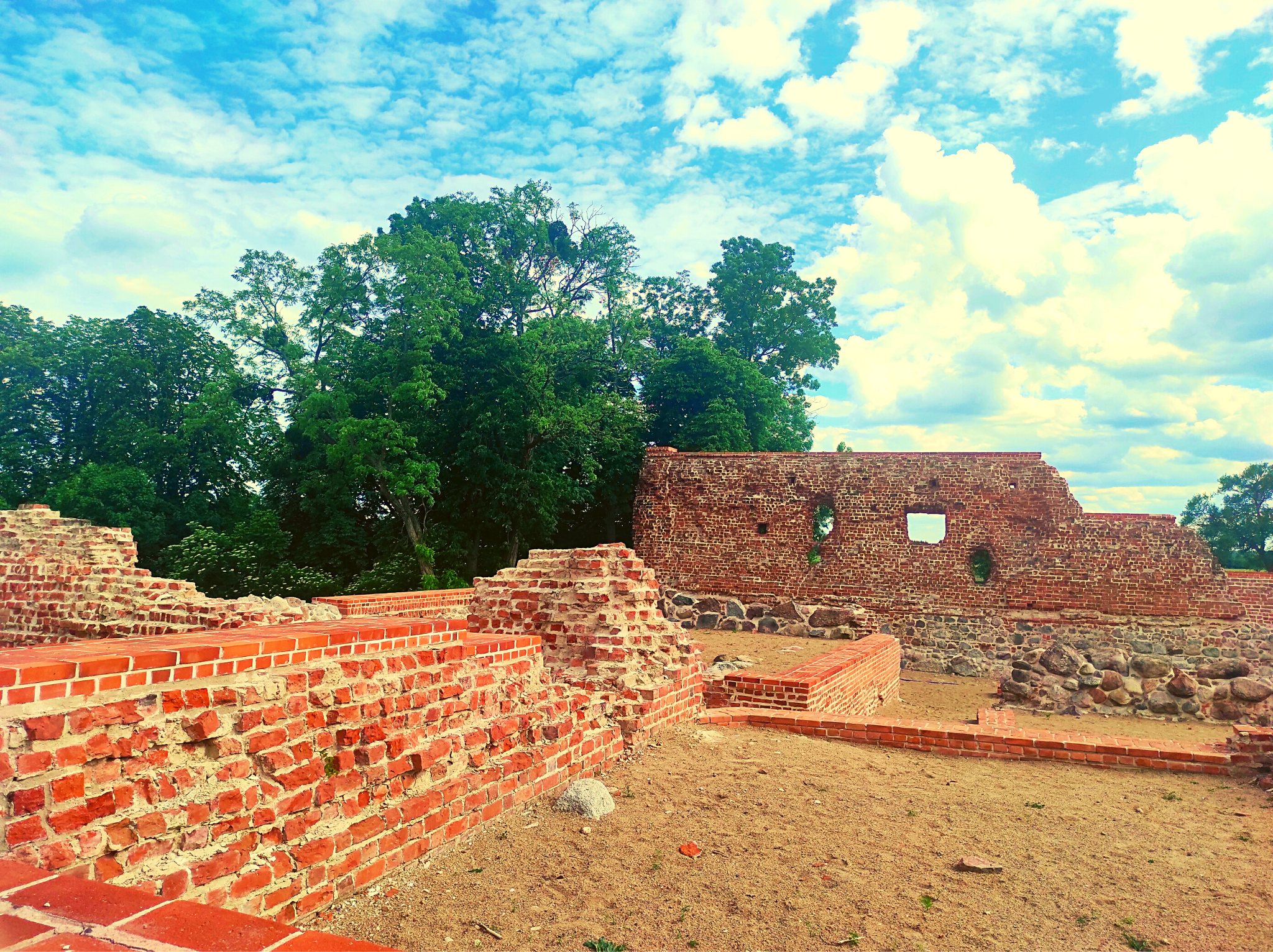
Sędziwój was the founder of Szubin castle. The 14th-century building was situated on a small, inaccessible hill amidst marshes spreading in the valley of the Gąsawka river. Built on a regular rectangular plan, 42 x 42 m, with a receding south-eastern corner, it was a typical example of a lowland castle.
With the change of owners the castle changed its face. As a result of construction work undertaken first by Krzysztof Opaliński in the 17th century, and then by the Mycielski family in the 18th century, the castle became first a Mannerist and then a Baroque residence with a park layout. As a result of the indebtedness of the estate, the Mycielski family was forced to sell it at a forced auction. Over the following years, the site lost its importance. The beginning of the 20th century brought its final end - the ruined building was demolished. Today we can only see the ruins of the castle with the best preserved southern wall, which is 7 metres high at its highest point. Due to the destruction and numerous reconstructions, it is impossible to reconstruct the original castle buildings. However, an attempt at reconstruction has been made. A model of the castle can be seen in the Museum of the Szubin Region.
Gallery