Information
- Address: Rynek 8 (Fordon), Bydgoszcz
UNRATED LOCATION
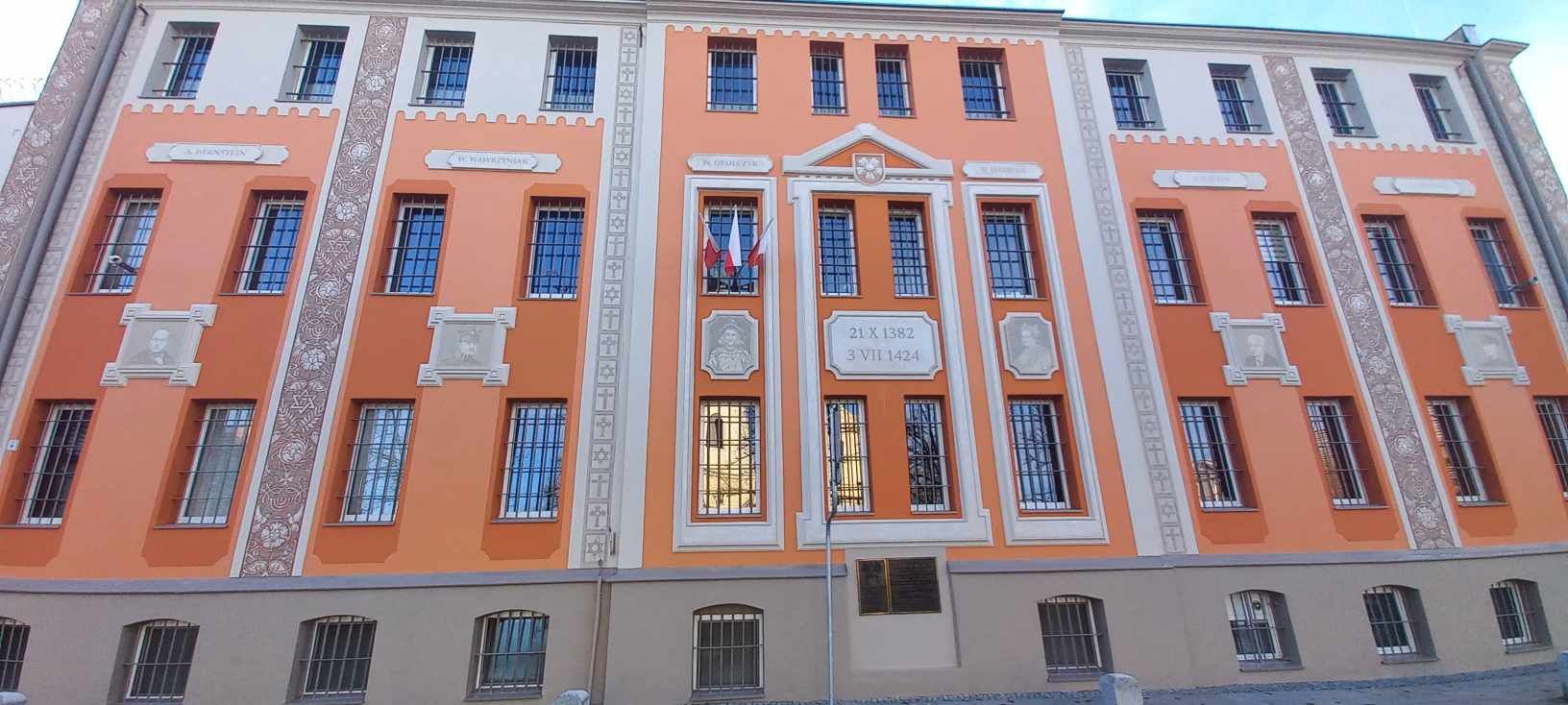
A three-dimensional historical mural adorns two walls of the administrative building of the External Division of the Remand Center in Stary Fordon.
The mural on the side facing Władysława Sikorskiego Street is dedicated to the female scouts of the Independence Underground imprisoned in Fordon between 1945 and 1956, as well as to the soldiers and officers of the Home Army and the Grey Ranks, and the "Zośka" Battalion. It features quotes from poems by Major Irena Tomalak, who was a prisoner in Fordon, and images of Fordon's now-defunct landmarks, such as the town hall, the shooting range, and the original bridge over the Vistula River from 1893 (the current bridge was built in 1956).
The mural from the Old Market Square has the shape of covered tenement houses, which show what the Fordon market square would look like if the prison had not been built there. On this wall, there are images of important historical figures: Władysław Opolczyk, who founded the town of Wyszogród in 1382, and Władysław Jagiełło, the founder of Fordon (1424). Next to them are: the mayor of Fordon, Wacław Wawrzyniak, the last pastor, Otto Rutzen, and the Jewish scientist Dawid Aron Bernstein.
On the wall of the prison facing Zakładowa Street, there are two large black-and-white portraits. These are reproductions of real photographs that appeared in 1933 in the magazine Tajny Detektyw (Secret Detective). The editor of this newspaper visited the women's prison in Fordon. The interviews resulted in two articles. The first photo shows a prison guard holding a child in her arms. It is a boy named Wojtuś. His biological mother was a prisoner. On the right, we see the mother (one of the inmates) with her child. Her image comes from a group photo taken in the prison by a photojournalist.
Members of the Old Fordon Enthusiasts Association, who initiated the creation of the murals, wanted to emphasize that this was a special place, a women's prison. Its history is inextricably linked not only with women, but also with children, who were often born there. They could stay with their mothers until they were one year old and then were sent to orphanages.
Gallery