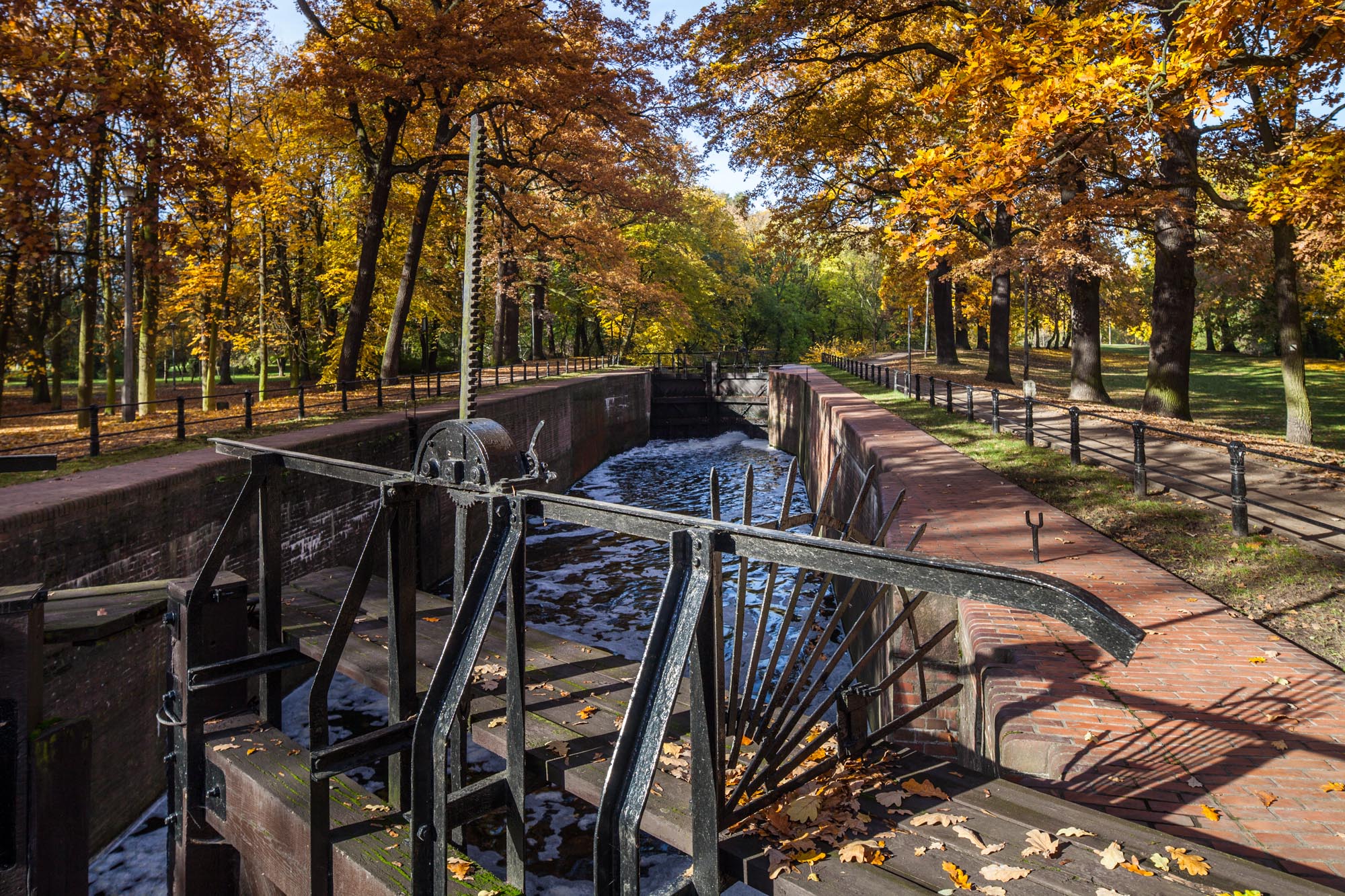
This significant hydrotechnical achievement played a crucial role in the city's development. Its construction began in 1773 by order of Prussian ruler Frederick the Great. In just 1.5 years, the canal, with its ten locks, was ready for use, connecting Bydgoszcz with Nakło and linking the Vistula and Oder rivers through their tributaries. This transformed Bydgoszcz into a major industrial and commercial hub. At the beginning of the 20th century, the canal was rebuilt, with a new section starting at the Okole lock. Today, the Bydgoszcz Canal is part of the Bydgoszcz Water Junction and the E-70 waterway, connecting western and eastern Europe.
The old Bydgoszcz Canal, now closed to navigation, primarily serves recreational purposes. Once, the promenades along its banks were the city's social hub—a place for relaxation and social gatherings. In the summer, it was full of recreational and entertainment venues, with restaurants, outdoor exhibitions, theater stages, and dance parties. In winter, it attracted crowds to the picturesque ice rink. Today, a walk along the promenades offers a unique encounter with the city's history and nature. Amidst the rustling of black poplars, chestnuts, oaks, elms, beeches, and lindens, you can see three historic locks: IV – at Wrocławska Street, V – at Czarna Droga Street, and VI – at Bronikowskiego Street.
The history of Poland's oldest navigable canal is showcased at the Bydgoszcz Canal Museum (Staroszkolna Street 10).
Gallery